Content
Votre usine dispose d’un four rotatif initialement réglé pour le gaz naturel. Un hiver, le prix du gaz triple et le seul combustible économique est le fioul lourd. Un brûleur standard refuse de fonctionner proprement, la flamme vacille et la température du revêtement dérive. Un brûleur à co-combustion multiple évite cette situation car il est conçu pour traiter des combustibles gazeux et liquides (et souvent des combustibles solides) sans s'arrêter. C'est la première chose à comprendre sur cet équipement : ce n'est pas un pistolet monocarburant avec modificateur ; il s'agit d'un système de combustion flexible en carburant, conçu pour des conditions de fonctionnement variables.
Ci-dessous, nous expliquons ce qu'est un brûleur à co-combustion multi-combustibles, comment fonctionne la technologie, où elle est le plus utile et ce qu'il faut vérifier avant d'acheter. L'accent est mis sur les fours rotatifs et les fours de traitement industriel, où la stabilité du combustible affecte directement la qualité de la production et les coûts d'exploitation.
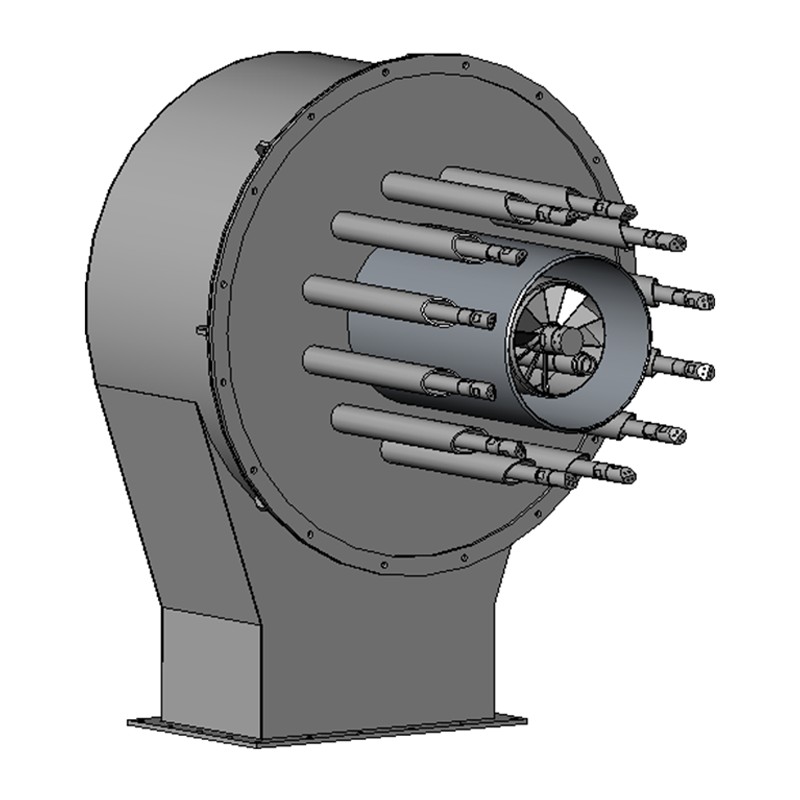
En termes simples, un brûleur à co-combustion à combustibles multiples est un brûleur unique qui peut brûler deux combustibles ou plus, séparément ou dans un flux mixte. Par exemple, un four peut fonctionner au gaz naturel pendant une équipe du matin, passer au fioul lourd lorsque les prix au comptant du gaz augmentent, et ajouter plus tard des fines de charbon comme combustible supplémentaire. Le brûleur dispose de chemins d'alimentation en carburant séparés, de contrôles de débit individuels et d'un système de distribution d'air commun qui mélange correctement chaque carburant.
Lorsque nous parlons de co-combustion, nous entendons l’utilisation simultanée de différents combustibles dans une même zone de flamme, et non simplement le passage d’un brûleur à l’autre. Cela donne aux opérateurs la possibilité d'utiliser le carburant disponible le moins cher sans sacrifier la qualité du processus. Pour de nombreuses usines, le principal attrait est la possibilité de changer de combustible sans arrêter le four.
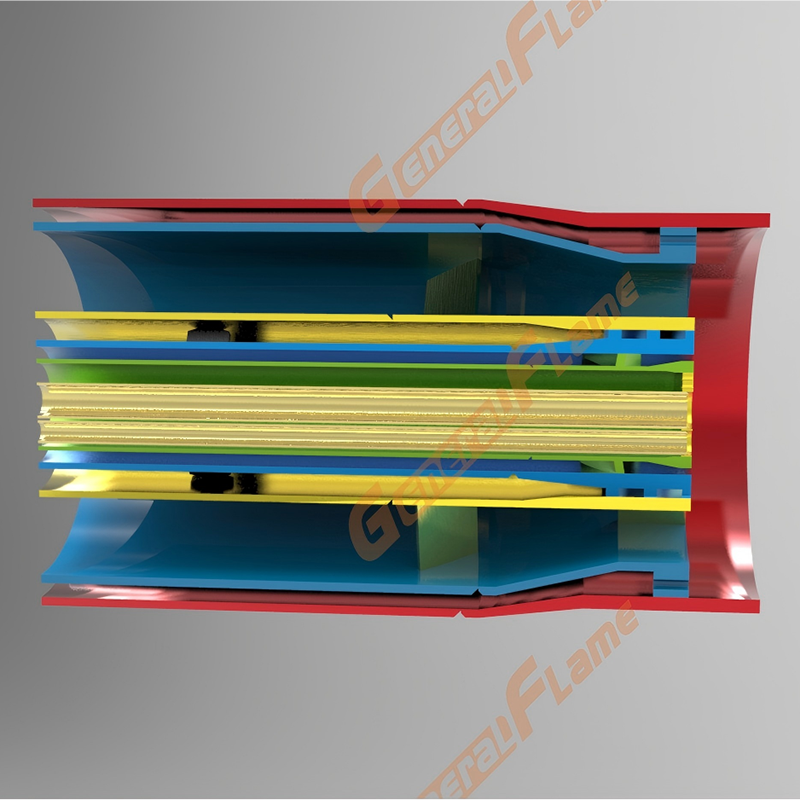
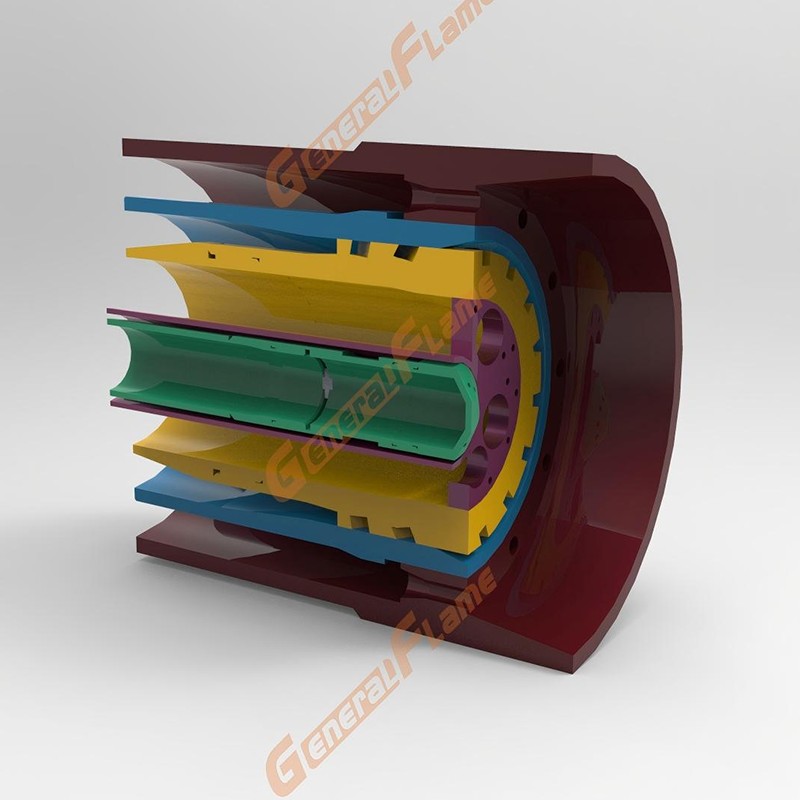
GénéralFlame's brûleur à co-combustible multicombustible suit cette architecture, avec des canaux de carburant séparés et une enveloppe d'air commune, pour maintenir la flamme stable lorsque le mélange de carburant change.
 Fabricants et fournisseurs de brûleurs à co-combustion à combustibles multiples Jiangsu Jufeng Thermal Technology Co., Ltd est un fabricant et fournisseur chinois de brûleurs à co-combustion à combustibles multiples OEM/ODM, usine, nous... Voir le produit →
 D'un point de vue pratique, un brûleur à co-combustion maintient les flux de combustible séparés jusqu'à ce qu'ils entrent dans la zone de combustion. Chaque chemin de carburant se termine par une buse ou un port d'injection. La tête du brûleur mélange le combustible avec l'air de combustion à l'aide d'aubes tourbillonnantes ou de roues fixes, produisant une zone de recirculation qui ancre la flamme.
Le gaz naturel ou le gaz de procédé est délivré sous pression contrôlée à un anneau ou une lance centrale. Une vanne de régulation ajuste le débit. L'inflammation du gaz étant rapide, la tâche principale consiste à éviter le retour de flamme et à empêcher la flamme de s'élever lors d'un débit d'air élevé. Si le gaz est votre combustible principal et que vous souhaitez quand même une option de secours, un brûleur à gaz peut être associé à une conduite de combustible liquide dans une seule unité de combustion.
 Fabricants, fournisseurs, usine OEM/ODM de brûleurs à gaz personnalisés - Jiangsu Jufen Jiangsu Jufeng Thermal Technology Co., Ltd est un fabricant chinois de brûleurs à gaz personnalisés et des fournisseurs de brûleurs à gaz OEM/ODM, usine, D... Voir le produit →
 Le fioul lourd ou le diesel doivent être atomisés avant la combustion. Le brûleur utilise de l'air comprimé, de la vapeur ou de la pression pour briser le liquide en fines gouttelettes. La taille des gouttelettes affecte la rapidité avec laquelle le carburant brûle et la quantité de suie formée. Pour le fioul lourd, le contrôle de la température est critique : la viscosité doit être suffisamment faible pour une bonne atomisation. Un spécialement conçu brûleur à combustible liquide gère les carburants à haute viscosité avec des buses plus grandes et un système d'atomisation assisté par vapeur.
 Fabricants, fournisseurs, usine OEM/ODM de brûleurs à combustible liquide personnalisés - Jiangsu Ju Jiangsu Jufeng Thermal Technology Co., Ltd est un fabricant chinois de brûleurs à carburant liquide personnalisés et des fournisseurs de brûleurs à carburant liquide OEM/ODM, fait... Voir le produit →
 Les particules de charbon pulvérisé, de coke de pétrole ou de biomasse sont transportées par l'air dans le brûleur. Les particules ont besoin d'un temps de séjour suffisant pour brûler. Une conception spécialisée empêche les cendres et les graviers de recirculer trop près du point d’injection, ce qui provoquerait une érosion ou des scories. L'alimentation en combustible solide nécessite également un flux d'air indépendant pour maintenir les particules en suspension et réparties uniformément.
En plus de ces chemins, le système d’air de combustion fournit de l’air primaire, secondaire et parfois tertiaire. L'ajustement de ces débits modifie la forme de la flamme et les émissions de NOx. Un système de contrôle moderne coordonne toutes les vannes de carburant et les registres d'air, et comprend des verrouillages de sécurité qui coupent le carburant en cas de perte de flamme.
Quatre avantages motivent la plupart des achats.
Ces avantages ne sont pas théoriques. Dans les applications du lithium, du nickel et du ciment, les opérateurs utilisent des systèmes multi-combustibles pour équilibrer les prix du gaz et du charbon tout en maintenant le profil de température requis pour la conversion des matériaux.
Les brûleurs à co-combustion à combustibles multiples sont particulièrement utiles dans les processus continus où le coût du combustible est une variable majeure. Les installations typiques comprennent les fours rotatifs à ciment et à chaux, les fours à nickel et ferro-alliages, les fours à carbonate de lithium, les fours de production de magnésie, les fours à oxyde de zinc et les systèmes d'incinération.
Un cas courant est celui d’un four rotatif à lépidolite pour la production de carbonate de lithium. Le processus nécessite une température stable autour de 900 à 1 000 degrés Celsius, et le passage du gaz naturel aux fines de charbon peut réduire considérablement les coûts énergétiques. Un brûleur à co-combustion qui traite à la fois du gaz et du combustible solide permet à l'usine de suivre les marchés des combustibles sans nuire à la transformation en phase cristalline qui détermine le rendement d'extraction du lithium. GeneralFlame a fourni ce type de brûleur de four rotatif de lépidolite dans les usines chinoises de transformation du lithium.
Une autre application fréquente est celle des fours à latérite de nickel, où les mélanges de combustibles comprennent souvent du charbon, du pétrole lourd et des gaz de traitement chauds. La co-combustion permet à l’usine d’utiliser le charbon local comme combustible de base et de passer au pétrole lorsque la qualité du charbon local fluctue.
Le choix du bon brûleur dépend de votre mélange de combustibles, de la taille de votre four et de votre philosophie de fonctionnement. Commencez par les caractéristiques du combustible, car elles déterminent la géométrie interne du brûleur et les systèmes auxiliaires.
| Carburant | PCI typique | Gérer la complexité | Question clé |
|---|---|---|---|
| Gaz naturel | 35-40 MJ/Nm3 | Faible ; pipeline et régulateurs | Allumage rapide, faible teneur en cendres |
| Fioul lourd | 39-42 MJ/kg | Moyen-élevé ; chauffage et atomisation | La viscosité affecte l'atomisation |
| Fines de charbon | 25-30 MJ/kg | Élevé ; fraisage et transport pneumatique | Gestion des cendres et du soufre |
| Biomasse | 12-18 MJ/kg | Élevé ; encombrant et sensible à l'humidité | Un prétraitement est souvent nécessaire |
Deuxièmement, vérifiez le taux de réduction du brûleur. Un brûleur avec un taux de réduction de 10:1 peut réduire la puissance à 10 pour cent de son maximum sans perdre la stabilité de la flamme. Pour la co-combustion, ce qui compte le plus, c'est la possibilité de modifier le mélange de combustibles tout en maintenant constante la puissance du four.
Troisièmement, regardez l’heure de commutation. Certains procédés laissent quelques minutes pour passer du combustible gazeux au combustible liquide. D’autres ont besoin d’une transition en douceur pour éviter les baisses de température. La commutation gaz-liquide est généralement rapide ; les mélanges de combustibles qui contiennent des particules solides peuvent nécessiter des cycles de purge pour empêcher l'accumulation de dépôts dans les canaux du brûleur.
Quatrièmement, évaluez le comportement des NOx. La co-combustion de carburants liquides peut augmenter les NOx car l'azote lié au carburant est libéré pendant la combustion. Si les limites d’émission sont strictes, choisissez un brûleur avec des zones à air étagé ou à recirculation interne. Les brûleurs de GeneralFlame peuvent être combinés avec l'injection SNCR lorsque la conception du four ne peut pas respecter les limites du seul étage de combustion.
Enfin, l'entretien. La co-combustion de combustibles solides augmente l’usure des pointes de buses et des manchons réfractaires. Des ports d'inspection accessibles, des inserts remplaçables et une conception du corps du brûleur permettant un retrait rapide deviennent importants pour une longue durée de fonctionnement.
La co-combustion n'est pas un produit de catalogue pour la plupart des fours. Un fournisseur doit adapter le corps du brûleur, les registres d'air et la philosophie de contrôle à votre mélange de combustibles et à la géométrie du four. L'historique des projets de GeneralFlame couvre les usines de lithium, de nickel, de magnésium, d'oxyde de zinc, de déchets dangereux et de granulés. Elle fournit également des systèmes de gestion de combustion (BMS) et des systèmes SNCR Denox, de sorte que le même fournisseur peut prendre la responsabilité de tout le côté flamme et émissions du four.
C’est important car la flexibilité du combustible sans contrôle des processus ne suffit pas. Un bon ensemble de brûleurs comprend des capteurs et une logique qui changent automatiquement de combustible lorsque la pression du gaz chute ou que la température de l'huile augmente, et il protège le four contre la perte de flamme pendant la transition.
La volatilité des prix de l’énergie et la demande croissante de carburants alternatifs font du brûleur à co-combustion multiple un investissement pratique. Il permet au four de fonctionner, réduit les dépenses en combustible et prépare votre usine aux futures options de combustible. Pour voir si ce type de brûleur correspond à votre procédé, contactez notre équipe d'ingénierie et discutez de votre mélange de combustibles réel et des limites du four.




 Fabricants d'équipements thermiques et de combustion haute performance (OEM/ODM)
 English
 русский
 Français
 Español
 عربى
عربى